

Marc is senior editor at CNET Money, overseeing such topics as banking and home equity. He’s been a writer and editor in the financial field for more than two decades, including for such media organizations as The Kiplinger Washington Editors, U.S. News & World Report, Bankrate and Dow Jones. Before joining CNET Money, Wojno was Senior Editor of Finance for ZDNet, writing on blockchain, cryptocurrency, finserv, investing and taxes. Outside the digital world, Marc can be found spinning vinyl, threading reel-to-reel tapes, shooting film with his Bolex and hosting an occasional pub quiz.
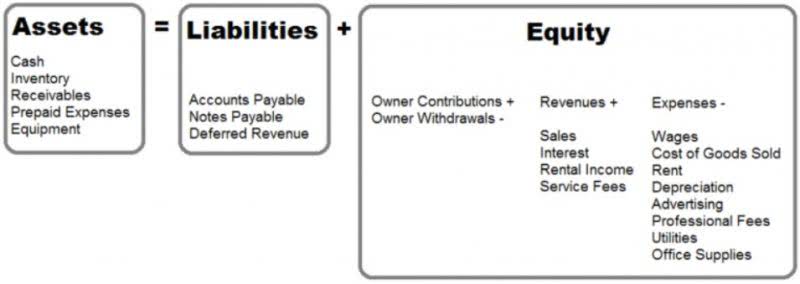
Because shareholders’ equity is equal to a company’s assets minus its debt, ROE is considered the return on net assets. Equity is the value of the business left to its owners after the business has paid all liabilities. Sometimes, there are different classes of ownership units, such as common stock and preferred stock.
What Is the Weighted Average Cost of Equity?
ROE is expressed as a percentage and can be calculated for any company if net income and equity are both positive numbers. Net income is calculated before dividends paid to common shareholders and after dividends to preferred shareholders and interest to lenders. While retained earnings are an essential part of shareholders’ equity (as the current percentage of net earnings is not given to shareholders as dividends), they should not be confused with liquid assets like cash. You can use several years of retained earnings for assets, expenses or other purposes to grow a business. It is very important to understand the difference between equity value and enterprise value as these are two very important concepts that nearly always come up in finance interviews.
- The balance sheet shows this decrease is due to both a reduction in assets and an increase in total liabilities.
- Personal D/E ratio is often used when an individual or a small business is applying for a loan.
- The Equity Ratio measures the long-term solvency of a company by comparing its shareholders’ equity to its total assets.
- If you own preferred shares, you are entitled to certain preferences over holders of common stock.
- In fact, it is sometimes known as the bottom line where a firm’s worth is concerned, both literally (as the last item on the income statement) and figuratively.
These industries include banks, financial institutions, and insurance firms. If the metric includes the net change in debt, interest income, and expense, then equity value is used; if it does not include the net change in debt, interest income, and expense, then enterprise value is used. The reason enterprise value is used before any interest or debt has been deducted is because that cash flow is available to both debt and equity shareholders. To calculate enterprise value from equity value, subtract cash and cash equivalents and add debt, preferred stock, and minority interest. Cash and cash equivalents are not invested in the business and do not represent the core assets of a business. To calculate equity value from enterprise value, subtract debt and debt equivalents, non-controlling interest and preferred stock, and add cash and cash equivalents.
What is equity? What are its types? How does equity investment work? Formula to calculate and more
Once total assets and liabilities are determined, shareholders’ equity can be calculated. Debt-to-equity (D/E) ratio is used to evaluate a company’s financial leverage and is calculated by dividing a company’s total liabilities by its shareholder equity. It is a measure of the degree total equity formula to which a company is financing its operations with debt rather than its own resources. Return on Equity is a two-part ratio in its derivation because it brings together the income statement and the balance sheet, where net income or profit is compared to the shareholders’ equity.
An outsize ROE can be indicative of a number of issues—such as inconsistent profits or excessive debt. ROE that widely changes from one period to the next may also be an indicator of inconsistent use of accounting methods. To estimate a company’s future growth rate, multiply the ROE by the company’s retention ratio.
D/E Ratio vs. Gearing Ratio
This implies that shareholders are losing on their investment in the company. For new and growing companies, a negative ROE is often to be expected; however, if negative ROE persists it can be a sign of trouble. Meanwhile, Apple’s financial structure and heavy reliance on debt means it can boast a very high ROE. At the https://www.bookstime.com/ end of fiscal year 2022, Apple had nearly six times as much debt as it did equity. Therefore, it is not surprising the company is able to generate high profits compared to its equity because its equity was not high. Net income is the amount of income, net expenses, and taxes that a company generates for a given period.